Helper Sick or Hospitalisation in Singapore 2026: Employer's Medical Obligations and Maid Insurance Under MOM
TL;DR: When your helper falls sick in Singapore, MOM makes the employer responsible for all her medical costs, from GP visits to hospitalisation. You must hold maid medical insurance with an annual claim limit of at least S$60,000 (the insurer pays the first S$15,000 in full, then 75% with you paying 25%), keep paying her salary in full and on time, and never deduct medical bills from her wages. Updated 22 September 2026.
When your migrant domestic worker (MDW) falls ill in Singapore, the Ministry of Manpower (MOM) places the financial and care responsibility squarely on the employer, and your maid insurance is the first line of defence against the bill. MOM states that employers have an important responsibility for the upkeep and maintenance of their MDWs while they are in Singapore, and lists "all medical costs, including hospitalisations and six-monthly medical examinations" among the costs you bear.
This guide explains exactly what you owe, what the S$60,000 insurance does (and doesn't) cover, the 2025 insurance changes, what happens if she falls ill overseas, and the step-by-step process when she gets sick.
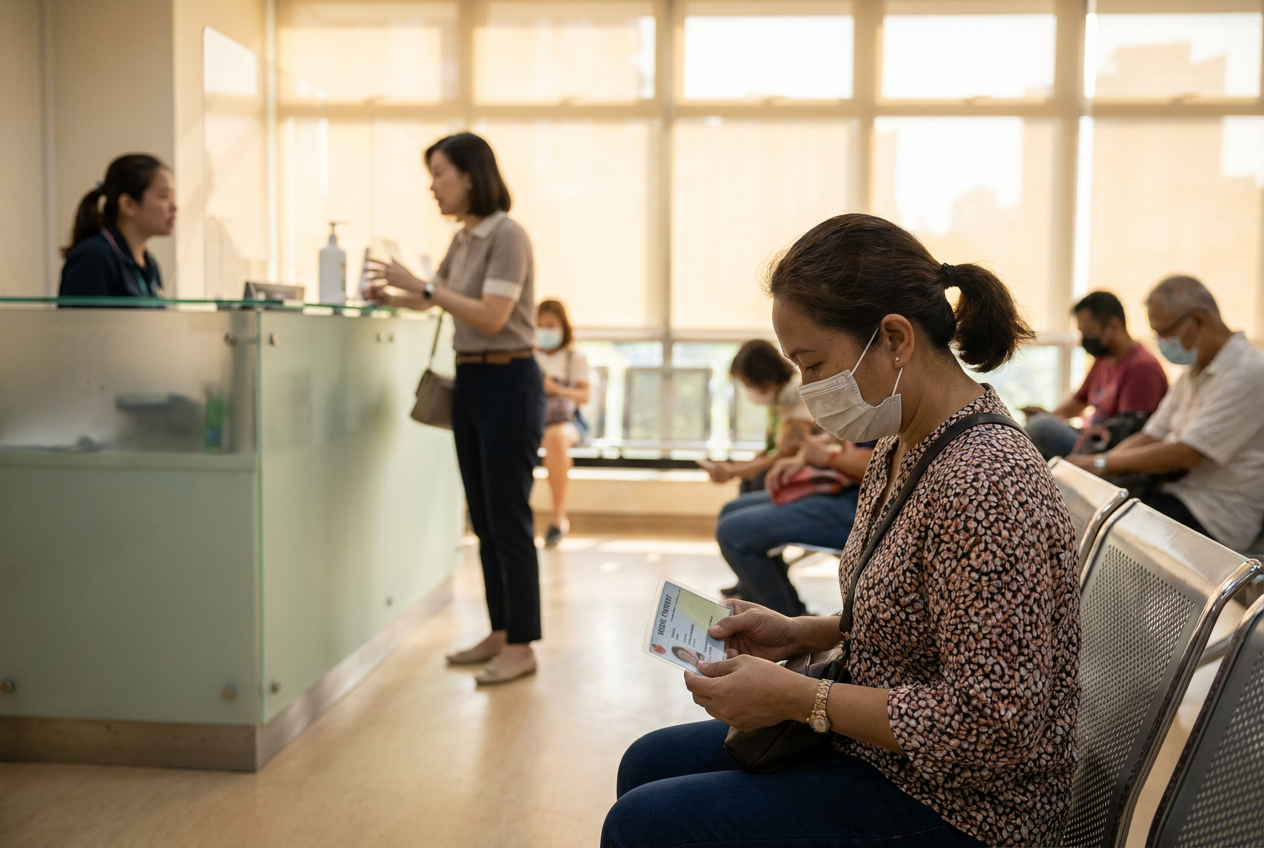
1. The employer's medical obligation
MOM's rest days, health and well-being page lists all medical costs, including hospitalisations and six-monthly medical examinations, as the employer's responsibility, along with medical and personal accident insurance. MOM's position is that employers bear the full cost of employing a migrant worker, including the cost of medical treatment.
Three things flow from this rule:
- Medical costs are mandatory. You cannot opt out, even if the helper offers to pay.
- Medical costs are not deductible from her salary. MOM's employer guide says no deductions are allowed for her upkeep, and upkeep includes medical treatment.
- Insurance reduces your out-of-pocket exposure but does not transfer the underlying duty. If a bill exceeds what the policy pays, the balance is still yours.
2. The S$60,000 minimum medical insurance
Every employer must buy and maintain medical insurance with an annual claim limit of at least S$60,000 for her inpatient care and day surgery (MOM insurance requirements). You also need personal accident insurance with a sum assured of at least S$60,000, payable to your helper or her beneficiaries. You cannot pass the cost of either policy on to her.
How the co-payment works: the first S$15,000 of claims is covered in full; for claim amounts above S$15,000, the insurer pays 75% and you pay 25%, up to the policy limit. So if a hospital bill comes to S$22,000, the first S$15,000 is covered in full, and on the remaining S$7,000 the insurer pays 75% while you co-pay 25% (S$1,750).
MOM says a S$60,000 annual claim limit covers an estimated 99% of MDW inpatient bills. The remaining cases, plus anything the policy excludes, are still your responsibility, which is why MOM encourages employers to consider higher coverage.
We compare plans in our helper insurance guide, and for everyday clinic visits a complementary primary care plan helps absorb the small but frequent costs that the inpatient policy does not touch.
3. The insurance changes: 2023 and 2025
MOM enhanced MDW medical insurance in two stages:
- Stage 1, from 1 July 2023: the minimum coverage rose from S$15,000 to an annual claim limit of at least S$60,000, with the 75% insurer and 25% employer co-payment for claim amounts above S$15,000.
- Stage 2, from 1 July 2025: standardised exclusion clauses across policies, premiums that differ by age (50 and under, and above 50), and insurers paying hospitals directly for admissible claims.
The co-payment is shared between the insurer and you. MOM does not allow any of it to be recovered from her wages.
4. What your obligation covers
- GP consultations and prescriptions: coughs, flu, gastric problems, skin conditions, minor injuries.
- Specialist consultations and treatment that her doctors consider necessary.
- Hospital admission and surgery, including emergency admissions.
- Emergency department visits.
- Necessary dental treatment: MOM says that if a Singapore-registered medical or dental professional considers the dental treatment necessary for her health, you bear the cost, even if the condition is not work-related (MOM dental FAQ).
- Six-monthly medical examinations (6ME), which screen for pregnancy and infectious diseases. See our 6ME guide for what gets screened.
- Pre-existing conditions: MOM warns that MDW medical insurance products may not cover pre-existing conditions, mental health treatment and other exceptional treatments. Where the policy does not pay, the cost of necessary treatment in Singapore still falls to you.
5. Where the rules are different
- Illness overseas: in January 2026, MOM clarified that when an MDW travels overseas on her rest days or home leave, medical treatment abroad falls outside the employer's liability. MOM suggests discussing travel plans with her, recommending travel insurance, and agreeing emergency contacts before she goes.
- Pregnancy: MOM's employer guide says an MDW who becomes pregnant will need to return home and you must inform MOM. Your security bond is not forfeited because she is pregnant.
- Mental health: MOM notes that MDW medical insurance products currently do not cover mental health treatment. Be aware of this gap, and see MOM's well-being guidance if she is struggling.
- Cosmetic procedures that no doctor considers necessary for her health are not a medical need you have to fund.
6. The process when your helper falls sick

- Start with a GP. For most complaints, a neighbourhood clinic is the right first step. Either accompany her or send her with cash (which she does not need to repay) and ask her to bring back the receipt and the doctor's memo.
- Escalate if needed. If the doctor recommends admission, check what your policy covers by ward class before choosing a hospital. MOM advises employers to ask the hospital to arrange treatment appropriate to the coverage they have paid for. Notify your insurer as early as possible.
- Handle the claim. Since July 2025, insurers pay hospitals directly for admissible claims. Keep all bills and discharge summaries, and settle your 25% co-payment and anything the policy does not cover.
- Pay her salary in full. Her monthly salary continues (see Section 7).
- Allow recovery. Light or no duties until the medical certificate expires. Rushing her back can lead to relapse and another bill.
7. Salary during medical leave
Domestic workers are not covered by the Employment Act, so the Act's sick leave quotas for other employees do not apply to your helper. What applies instead is MOM's rule for MDWs: her salary must be paid in full and on time every month, and you must not make deductions to recover her upkeep, which includes medical treatment.
In practice, keep paying her full monthly salary while she is on medical leave or in hospital. Docking pay for sick days, or asking her to work extra days to "make up" time, is the kind of salary deduction MOM's guide warns against, and it is one of the fastest ways to lose a helper's trust. Check your signed employment contract too, as it may include specific terms on sick leave.
8. Public vs private hospital
Your choice of hospital and ward class affects how much of the bill your policy pays. Public hospitals such as Singapore General Hospital (SGH), National University Hospital (NUH), Changi General and Khoo Teck Puat offer a range of ward classes; private hospitals offer shorter waits and more comfortable rooms at private-sector prices.
MOM tells employers to understand what their MDW's medical insurance actually covers, to look for restrictions by ward class, and to ask the hospital to arrange treatment appropriate to the coverage level they have paid for. Before an admission that is not an emergency, read your policy's terms on ward class and private hospitals, and ask the hospital for an estimate. Anything the policy does not pay is still yours, never hers.
9. Documenting medical costs

Good records make claims and any later questions much easier. Keep:
- Original clinic and pharmacy receipts.
- Itemised hospital bills and the discharge summary.
- The doctor's medical certificate (MC) covering the leave period.
- Lab reports, scans, and any specialist memos.
- A short written timeline of events, useful if the insurer queries the claim.
10. When the illness is serious
If your helper needs a long hospital stay or her condition prevents her from working long-term, talk to your agency early. Possible paths include:
- Extended medical leave on full salary until she recovers.
- Ending the employment and sending her home for further treatment in her country, with her agreement and her doctor's advice on fitness to travel. See our cancellation guide for the proper exit process and the role of the S$5,000 security bond.
- Lighter duties once she recovers partially, if her doctor agrees.
If the long-term outcome is that she cannot return to domestic work, plan the transition early; new candidates can be screened in parallel against our hiring criteria checklist.
11. Common pitfalls to avoid
- Asking her to pay her own GP bill. Medical costs are yours, even if she offers.
- Claiming sick days against rest days. Rest days are a separate entitlement. MOM requires at least one rest day a month that cannot be compensated away.
- Cutting salary during recovery. Her salary must be paid in full every month.
- Letting insurance lapse. The mandatory medical and personal accident cover must stay in force; renew on time.
- Assuming overseas illness is covered. Since MOM's January 2026 clarification, treatment abroad on rest days or home leave is outside your liability, so talk to her about travel insurance before she travels.
- Delaying care to save money. A GP visit today is cheaper than an emergency admission next week.
A note from Upwill
Helper illness is one of the situations employers most often ask us about. If you are unsure whether a specific cost is yours to bear, the safe default in Singapore is: assume yes for necessary treatment in Singapore, pay first, and check with MOM or your agency afterwards.
Reviewed by Yvonne, Placement Consultant at Upwill Employment Services (MOM EA Licence 24C2628). Last reviewed 22 September 2026 against MOM's insurance requirements, employer's guide and 2026 press replies. This article is general guidance and not legal advice; for case-specific issues, contact MOM or your licensed agency.