Can a Domestic Helper Change Job in Singapore? MOM Rules on Changing Employer (2026)
Short answer: Yes, a Migrant Domestic Worker (MDW, still commonly called a "maid" or "domestic helper") can change job in Singapore, but only through one legal channel: MOM's formal transfer process, where a new employer applies for a new Work Permit with the current employer's consent, at least 30 days before her current permit expires. She cannot simply walk out, start working for a neighbour, or switch into office, F&B or retail work on her domestic Work Permit. Doing so breaks the Employment of Foreign Manpower Act (EFMA), and both the helper and the person who engages her commit an offence.
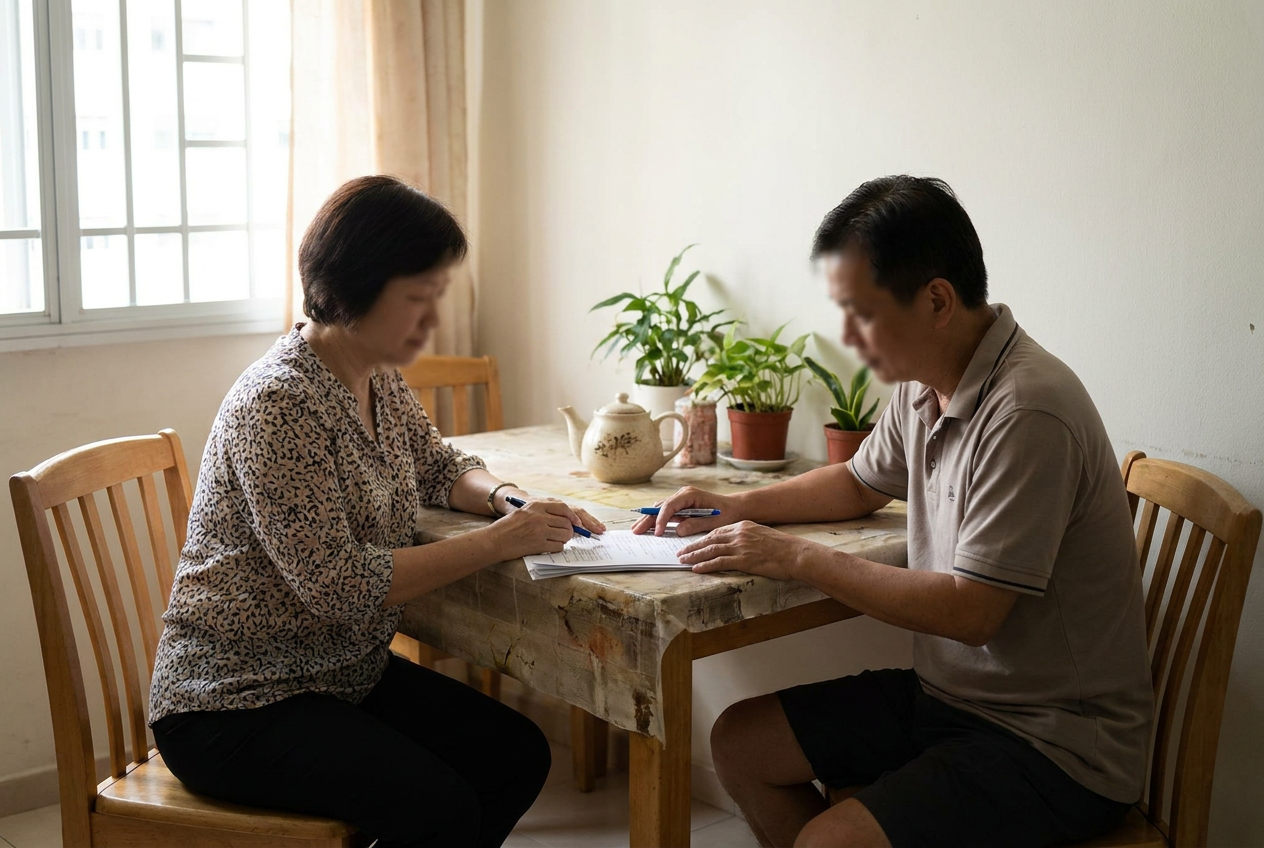
This guide explains what is and isn't allowed under the Ministry of Manpower (MOM) rules as they stand in September 2026, with a link to the official MOM page for each rule. It is written for helpers who are asking the question themselves, and for employers trying to understand their obligations.
Reviewed by Yvonne, Placement Consultant at Upwill Employment Services (MOM EA Licence 24C2628). Last reviewed 22 September 2026.
Short answer: yes, but only via MOM's process
A domestic helper in Singapore holds a Work Permit tied to one employer and one residential address. MOM's rules say she can only work for her employer, only at the residential address declared to MOM, only doing domestic chores, and cannot take on work with other employers (MOM employment rules).
To "change job" legally, one of these things has to happen:
- Direct transfer: a new employer applies for a new Work Permit for her, with her current employer's consent.
- Transfer through an employment agency: the current employer and a licensed agency agree that the agency takes over responsibility for her while it looks for a new employer.
- Her Work Permit ends and she goes home, and a new employer later applies for a fresh permit.
Separately, marrying a Singapore Citizen or PR needs MOM's approval first (see below). Any other arrangement, such as working on a rest day, helping at a relative's shop, or cleaning a neighbour's flat for cash, is illegal.
The legal route: a formal transfer
MOM's direct transfer process has these requirements (MOM direct transfer):
- Current employer's consent, which the new employer requests through MOM's FDW eService before submitting the Work Permit application.
- Timing: the first steps and the application must be done at least 30 days before her current Work Permit expires.
- A 6-monthly medical examination completed before the transfer if one is due; the new employer should check with the current employer that it has been done.
- A new eligible employer who meets MOM's employer requirements.
- After approval, a new security bond and new medical and personal accident insurance bought by the new employer. MOM says the outcome of a transfer application usually comes within 1 week.
Through the agency route, once the agency agrees to the transfer and the Work Permit is cancelled, she gets a Special Pass valid for up to 30 days, and the agency becomes responsible for her accommodation, food, medical treatment and insurance of at least S$60,000 until she starts with a new employer. If no employer is found in time, the agency must arrange and pay for her trip home (MOM transfer through an EA).
The mechanics are covered in our step-by-step guides:
- How to transfer a maid in Singapore (2026 process)
- Transfer a maid without an agency (direct transfer)
What if the current employer refuses to consent?
This is one of the most painful situations in domestic employment, and one of the most misunderstood.
The employer is the permit holder, and MOM's direct transfer process only moves forward with the current employer's consent. A helper who simply wants a change does not have an automatic right to transfer.
She still has options:
- Talk it through, with help. The Centre for Domestic Employees (CDE) runs a 24-hour helpline on 1800 2255 233 and offers advisory, mediation and counselling services for both helpers and employers (CDE).
- Call MOM. Helpers in distress can call MOM's MDW Helpline on 1800 339 5505, Monday to Friday, 8.30am to 5.30pm, to speak to an MOM officer. In danger, call the Police on 999 (MOM).
- Report breaches. If there is abuse, unpaid salary, not enough food or rest, or another breach, she should report it to MOM. MOM can debar employers who abuse or ill-treat their helpers (MOM debarment).
- End the employment and go home. When her Work Permit is cancelled or expires, the employer must send her home, or the security bond can be forfeited (MOM security bond). A new employer can then apply for a fresh permit.
For employers, MOM's guide suggests that when you end a helper's employment you ask whether she prefers to return home or move to another employer in Singapore. A helper considering her options should also read our companion guide: When a maid wants to terminate her contract: what to do.
Can she change job when her Work Permit is ending?
Yes, and this is the cleanest moment to do it, as long as it is planned early. As her Work Permit approaches expiry, the options are:
| Option | What happens |
|---|---|
| Renew with same employer | Employer renews the Work Permit. |
| Move to a new employer | Current employer consents; the new employer applies at least 30 days before the permit expires and receives a new approval. |
| Return home | Employer cancels the Work Permit and sends her home. |
Even near the end of her permit, the current employer must still consent to a transfer. The 30-day rule means the conversation needs to start well before the last month.
Can she work in office, F&B or retail instead of domestic work?
No, not on her current permit. A Work Permit for a Migrant Domestic Worker covers domestic chores at the residential address declared to MOM, for her employer only. It does not let her work in a shop, restaurant, office or any business, even the employer's own (MOM).
Working in another sector would need a different work pass applied for by a different employer, subject to that pass's own criteria. Her MDW Work Permit cannot simply be converted.
What if she wants to marry a Singapore Citizen or PR?
This is a separate legal pathway with its own paperwork.
MOM requires Work Permit holders to get approval before marrying a Singapore Citizen or Permanent Resident, in Singapore or overseas, whatever the type of marriage: civil, religious or customary (MOM FAQ).
Key points from MOM:
- The rule also applies to former Work Permit holders, unless they have since moved to an Employment Pass or S Pass or become a Singapore Citizen or PR.
- Applications can be made online, and MOM says decisions are usually given within 4 weeks of receiving all required documents.
- Marrying without approval can mean losing the right to work in Singapore and being barred from entering Singapore for a period.
- A Work Permit holder may only become pregnant and give birth in Singapore if she is already married, with MOM's approval, to a Singapore Citizen or PR.
Can she do part-time cleaning on her off-day?
No. MOM states that it is an offence for a domestic worker to take up part-time work, with or without her employer's consent (MOM FAQ). MOM's employer guide adds that it is illegal for anyone to ask a helper to work for another employer, whether on her rest day or not, and illegal for an employer to engage someone else's helper (MOM employer guide).
This includes:
- Cleaning a neighbour's flat for cash
- Babysitting another family's child
- Helping at a relative's stall or shop
- Cooking for someone else's private dinner party
Households that need occasional extra help can legally use a Household Services Scheme (HSS) company, whose own workers provide part-time home cleaning and similar services (MOM on HSS).
Illegal deployment: penalties for both helper and employer
"Illegal deployment" is MOM's term for having a helper work somewhere, or for someone, other than what her permit allows. It is a serious offence under EFMA.
For the employer (or the person who hires her on the side)
- A financial penalty of up to S$10,000 for illegal deployment (MOM).
- For employing a worker without a valid Work Permit, a fine of S$5,000 to S$30,000, up to 1 year in jail, or both.
- Debarment from employing helpers, for a period that depends on how serious the offence is (MOM).
- Possible forfeiture of the S$5,000 security bond when Work Permit conditions are breached.
For the helper
- MOM's guide states that a helper who works for anyone other than her official employer commits an offence under EFMA, whatever day it happens.
- A breach of her Work Permit conditions can put her permit, and her future work in Singapore, at risk.
Common scenarios MOM treats as illegal deployment:
- Helper sent to work at the employer's office, hawker stall or shop.
- Helper "loaned" to a relative's household without a formal transfer. (Looking after the employer's own child or parent at a relative's home is allowed only under MOM's caregiving exception, with written agreement and prior notice to MOM.)
- Helper doing weekend cleaning rounds for a third party.
- Helper deployed to an address not registered with MOM.
The point is structural: the Work Permit covers one employer, one address and one type of work. Any deviation is a breach.
Getting help with an employer and helper dispute
When a helper and employer disagree about a transfer, salary, working conditions or contract terms, MOM's advice is to try to resolve it together first, and never to take matters into your own hands; criminal matters must be reported to the authorities (MOM resolving disputes).
If that does not work:
- CDE mediation: the Centre for Domestic Employees offers advisory, mediation and counselling for both sides, 24-hour helpline 1800 2255 233.
- MOM's MDW Helpline (1800 339 5505, weekdays 8.30am to 5.30pm) for helpers in distress.
- Employment agency disputes: your agency must disclose its dispute resolution process, and MOM points employers to the Small Claims Tribunals for unresolved contractual disputes.
Before any dispute escalates, both parties should also check the Work Permit status so they are working from the same facts (validity, registered address, security bond status).
Checklist for a legal job change
Whether you are the helper or the current employer, run through this list before anything is signed.
- At least 30 days remain on the current Work Permit when the transfer steps and application are done.
- The current employer has given consent through MOM's process. A verbal "okay" is not enough.
- Any 6-monthly medical that is due is done before the transfer.
- The new employer meets MOM's requirements and is not debarred.
- MOM has approved the new Work Permit before she starts work at the new address.
- The new employer has the security bond and insurance in place.
- No Settling-in Programme is needed: the SIP is only for first-time helpers in Singapore (MOM SIP).
- No unauthorised work in between. Under the agency route she holds a Special Pass of up to 30 days and the agency is responsible for her upkeep.
If any one of those is missing, the "job change" is not legal, no matter how friendly the arrangement looks.
Reviewed by
Yvonne is a Licensed Employment Agent in Singapore, operating under EA Licence 24C2628 at Upwill Employment. She reviewed this article on 22 September 2026 against the Ministry of Manpower's published rules for Migrant Domestic Workers. For personal advice on a specific contract situation, contact Upwill. Every case has its own facts.